

upenn barun dental
Invisalign Attachments Explained: What They Are and Why Some Patients Need Them
September 8, 2026|Invisalign|By UPenn Barun Dental Clinic
Invisalign attachments are small, tooth-colored composite bumps bonded to specific teeth so the aligner has extra grip for movements plastic alone cannot achieve, such as rotating a tooth or tipping a root into position. They are subtle, temporary, and do not interfere with normal eating or speaking. Patients starting Invisalign in Seoul often notice small bumps appearing on certain teeth partway through treatment and wonder whether something has gone wrong. These are attachments, a planned and routine part of many Invisalign cases, not a sign of a problem. Understanding what they do — and what they don’t do — helps international patients feel confident about each stage of treatment while living and working in Korea.
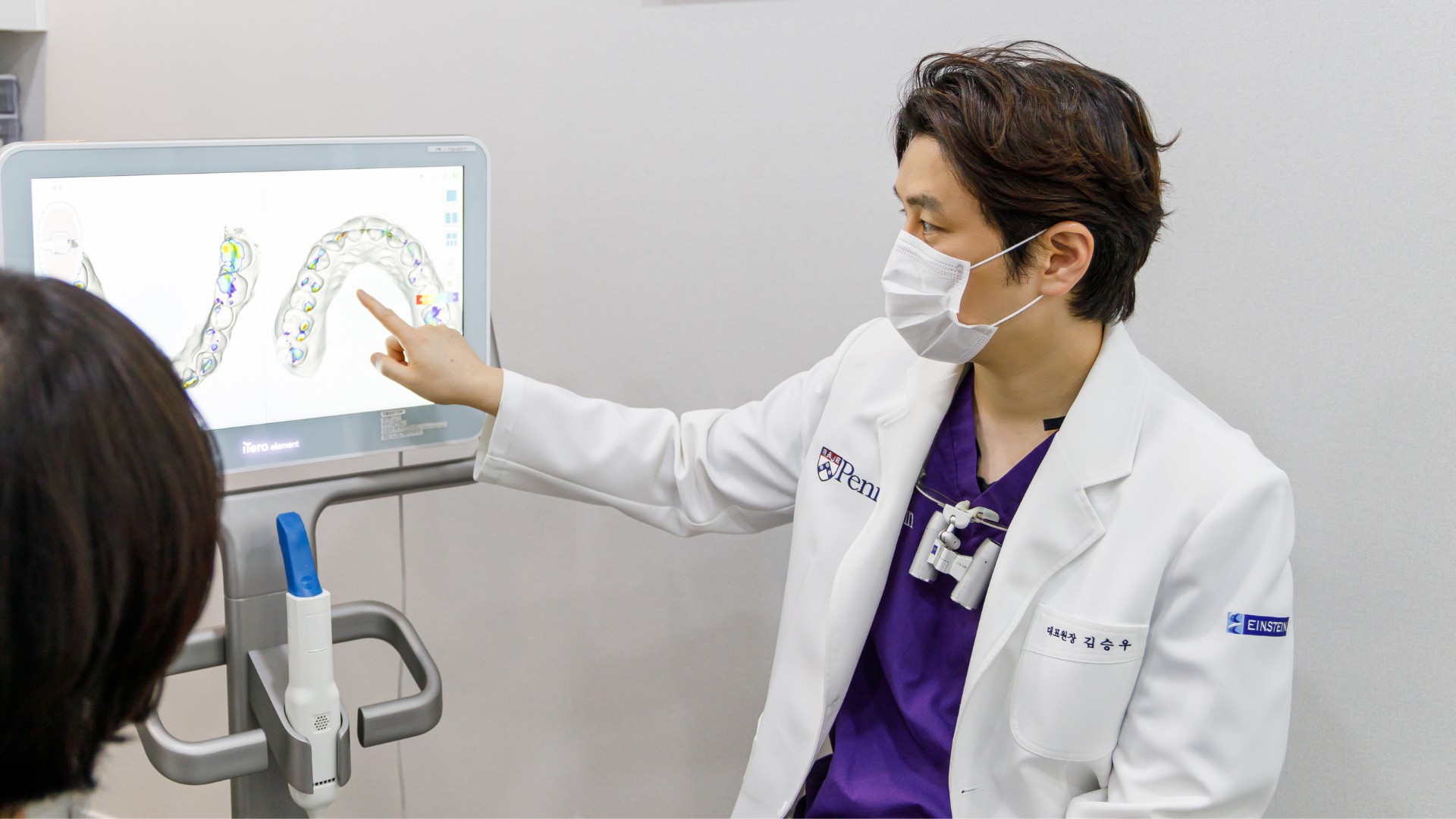
1. What Invisalign Attachments Are
Attachments are small dots of tooth-colored dental composite bonded directly onto the enamel surface at precise positions mapped out in the digital treatment plan. Each aligner tray then clips onto these bumps the way a handle grips a lever, allowing it to apply controlled pressure in a specific direction rather than relying on the tray’s shape alone. They are placed only on the teeth that need them, are custom-shaped for each case, and are removed once their job is done.
2. Why Some Tooth Movements Need Attachments
Clear aligners move teeth by gentle, incremental pressure, but some movements require more precise control than smooth plastic alone can deliver.
- Rotating a rounded tooth, such as a canine or premolar, needs a firm point of contact to turn it accurately.
- Extruding a short tooth or intruding one that sits too low both require directional grip attachments provide.
- Tipping a root or closing a gap along the arch often needs the added leverage an attachment supplies.
3. Do Attachments Affect Your Appearance
Attachments are made from the same composite material used in tooth-colored fillings and are shaded to blend with natural enamel, so they are far less noticeable than metal brackets. In conversation and at normal social distance, most people do not notice them at all, and they are completely hidden once the clear aligner is worn over them.
Patients attending interviews, client meetings, or public-facing work in Seoul during treatment generally report no noticeable change in how their smile is perceived.
4. Eating, Speaking, and Daily Comfort
Because attachments sit on the tooth surface rather than the biting edge, they do not change how food is chewed or how firmly the jaw can close.
- Attachments are removed along with the aligner for meals, so eating habits stay completely normal.
- Speech may feel slightly different for the first day or two, similar to adjusting to the aligners themselves.
- The tongue may notice the texture at first, but most patients stop feeling it within about a week.
5. Placement, Removal, and Timeline
Attachments are bonded chairside in a short, painless appointment using a template tray that positions each one exactly as planned, and they are polished off just as easily once treatment reaches the stage where they are no longer needed. Not every case requires them, and not every tooth in a case that does. The decision is based entirely on which movements the treatment plan calls for.
6. Precise Attachment Planning at UPenn Barun Dental Clinic
Attachment placement is one of the details that separates a well-planned Invisalign case from a generic one, since a poorly placed attachment can slow progress or leave a movement incomplete. At UPenn Barun Dental Clinic in Jamsil, the clinic director is board-certified by the American Board of Orthodontics and trained at the University of Pennsylvania, and reviews each digital treatment plan personally to confirm attachment positions match the movements each tooth actually needs. As a native English speaker, the director also explains exactly which teeth will receive attachments and why, directly and without an interpreter, so international patients understand their plan from the first visit.
Conclusion
Attachments are a small but purposeful part of many Invisalign plans, designed to make treatment more accurate rather than more complicated, and they fade into the background of daily life within days. If you’re weighing Invisalign while living in or visiting Seoul and want a clear, English-language explanation of whether your case would need them, UPenn Barun Dental Clinic in Jamsil welcomes a consultation to walk through your specific treatment plan in detail.
Frequently Asked Questions
Do all Invisalign patients need attachments?
No. Attachments are added only when a treatment plan includes movements that need extra grip, such as rotations or root tipping. Simpler cases involving mainly spacing or minor crowding may need few or none. Your treatment plan will specify exactly which teeth, if any, require them before treatment begins.
Does removing attachments hurt or damage enamel?
No. Attachments are polished off using the same gentle instruments used to remove composite fillings, and the process is quick and painless. The enamel underneath is unaffected, and teeth are typically polished smooth immediately afterward so no residue or roughness remains.
Will attachments show up in photos or video calls?
They are subtle and tooth-colored, so they are rarely noticeable in casual photos or on video calls at normal distance. They become more visible only in close-up, well-lit shots. Most patients continue attending work meetings and social events without feeling self-conscious during this stage of treatment.
Can attachments come off on their own during treatment?
Occasionally an attachment can loosen, especially when eating very sticky or hard foods, though this is uncommon. If one comes off, it should be reported at your next check so it can be rebonded if the remaining treatment still depends on it for that specific movement.
upennbarundental / US ORTHODONTIST