
upenn barun dental
Dental Implant Cost in Korea: Why International Patients Choose Seoul
July 12, 2026|Implant|By UPenn Barun Dental Clinic
Dental implants in Korea cost 60–70 % less than equivalent treatment in the United States or Western Europe, while meeting the same international clinical standards. Seoul has become one of the world’s leading destinations for implant-focused dental care — and the reasons go well beyond price alone. For international patients weighing implant options, cost is rarely the only concern: quality, communication, and scheduling matter equally. Seoul’s Jamsil district offers a rare combination — internationally trained specialists, state-of-the-art facilities, and transparent English-language consultations — all at a fraction of the fees charged in most Western countries.
1. Korea’s Price Advantage in a Global Context
A single implant in the United States typically costs USD 3,000–6,000; at a comparable Seoul clinic, the same treatment generally ranges from USD 1,200–2,200. That gap — before accounting for any travel savings — makes Korea one of the world’s most cost-effective implant destinations.
- Korean overhead costs — real estate, staffing, equipment leasing — are structurally lower than in North America or Europe, allowing clinics to price competitively without reducing quality.
- Multi-implant cases amplify the saving; full-arch restorations can cost USD 15,000–40,000 less than equivalent treatment at home.
- Internationally recognised implant systems such as Straumann, Osstem, and Dentium are standard at leading Seoul clinics, supporting global warranty claims.
2. What Your Implant Fee Actually Covers
Transparent pricing means understanding every component: the titanium fixture, the abutment, and the final prosthetic crown. Reputable Seoul clinics include diagnostic CBCT imaging, surgical guide fabrication, and post-operative review in the quoted fee. At UPenn Barun Dental Clinic in Jamsil, every cost is itemised in English during the initial consultation, so patients know exactly what they are paying for before treatment begins — no billing surprises on the way out.
3. ABO-Level Expertise at Seoul Prices
Cost savings only make sense when the clinical outcome is equally sound.
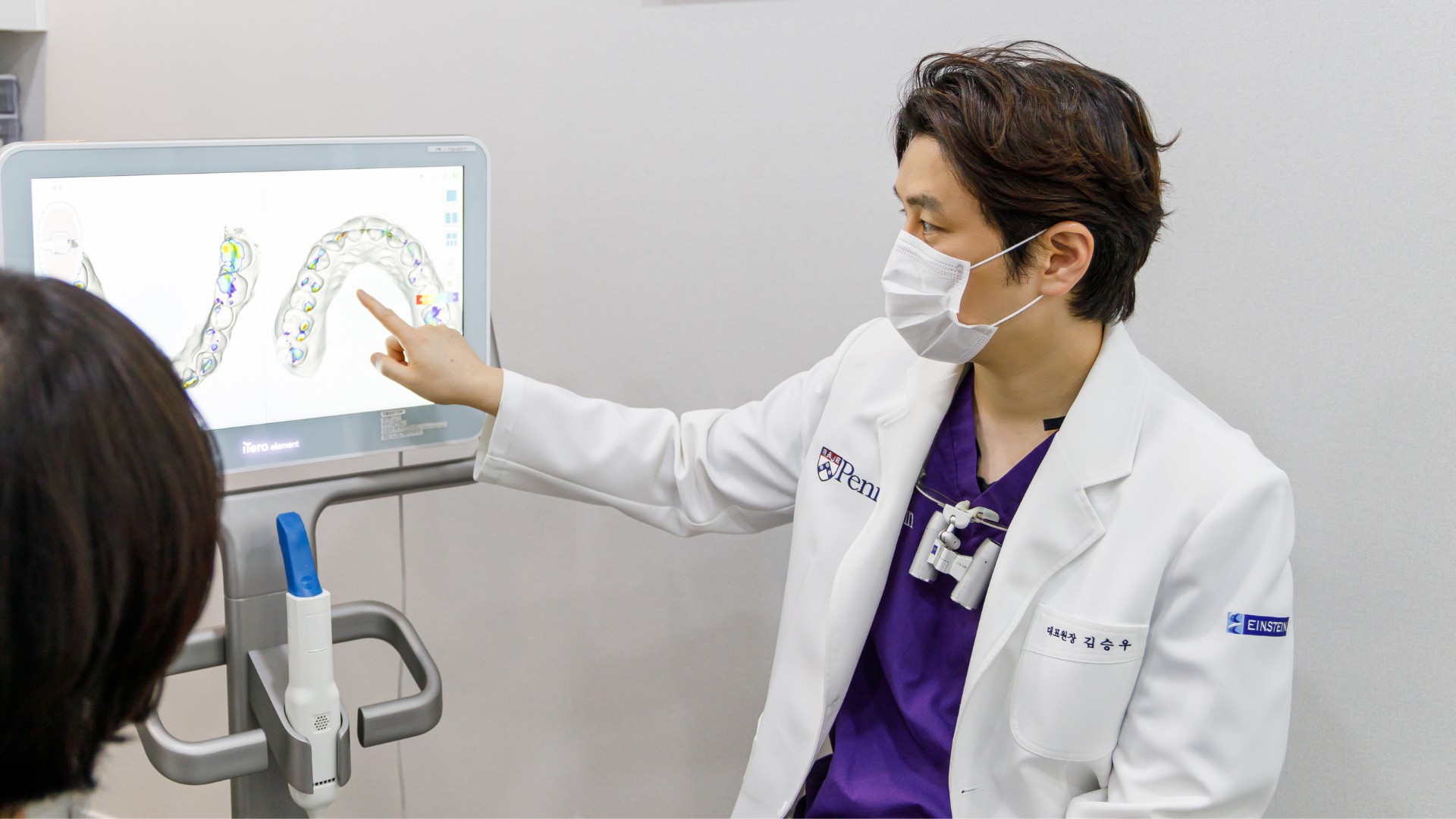
- UPenn Barun’s clinic director was trained at the University of Pennsylvania and is board-certified by the American Board of Orthodontics — the same rigorous credential standard applied at top U.S. practices.
- American-trained clinicians in Korea apply the same evidence-based protocols for implant planning, surgical placement, and prosthetic loading as their home-country counterparts.
- Patients do not have to choose between affordability and the clinical rigour they expect from a Western specialist.
4. Insurance & Out-of-Pocket Planning
Korean national health insurance (NHI) covers partial implant costs for patients aged 65 and over; foreign residents enrolled in NHI may qualify for the same benefit. For those on international private plans, UPenn Barun provides fully itemised English-language receipts that can be submitted directly for reimbursement claims at home — a practical advantage that few Korean clinics extend as standard. Always review your policy’s dental schedule before committing to treatment.
5. Scheduling Implants Around Your Korea Stay
Implant treatment follows a biological timeline: fixture placement, then an osseointegration period before the final crown is fitted.
- Visit 1 (half-day): English-language consultation, CBCT scan, and surgical placement of the titanium fixture.
- Healing interval: 10–16 weeks of osseointegration with no clinic attendance required.
- Visit 2 (half-day): abutment connection and crown delivery, completing the restoration.
Patients on a shorter posting can complete the surgical phase in Seoul and arrange crown delivery with a dentist at home using the English-language documentation UPenn Barun provides.
6. The Value of English-Language Care
Cost savings lose their appeal when communication barriers lead to misunderstandings about treatment scope, materials, or aftercare. At UPenn Barun Dental Clinic, the director is a native English speaker — consultations, consent forms, and post-operative instructions are delivered entirely in English, without an interpreter. For international patients, that clarity protects both their investment and their health.
Conclusion
Seoul presents a genuinely rare proposition for anyone facing implant treatment: internationally credentialed clinicians, proven implant systems, and fees that are a fraction of North American or European norms. If you are considering dental implants during a stay in Korea, UPenn Barun Dental Clinic in Jamsil welcomes you for a no-obligation English-language consultation. Visit us near Jamsilsaenae Station, Exit 5, Songpa-gu, and take the first step toward a completed smile.
Frequently Asked Questions
How much does a single dental implant cost in Korea for a foreign patient?
At a reputable Seoul clinic, a single implant — including the fixture, abutment, and crown — typically ranges from USD 1,200–2,200. Diagnostic imaging and surgical planning are usually included in the quoted fee. By comparison, the same treatment averages USD 3,000–6,000 in the United States, making Korea a substantial saving even after travel costs.
Is dental implant quality in Korea the same as in the US or Europe?
At internationally trained clinics such as UPenn Barun Dental Clinic, yes. The clinic director holds a University of Pennsylvania training background and ABO board certification, and uses globally recognised implant systems. Clinical protocols match those applied at accredited practices in the US and Europe, so patients receive the same standard of care at a fraction of the cost.
Can I use my international health insurance for implants in Korea?
Most international private plans exclude routine implants, but some cover teeth lost due to injury or disease. UPenn Barun Dental Clinic provides fully itemised English-language receipts on request, making it straightforward to submit a reimbursement claim to your insurer at home. Check your policy’s dental schedule carefully before beginning treatment.
How many trips to Seoul do I need to complete an implant?
A standard single implant requires a minimum of two visits spaced 10–16 weeks apart — one for fixture placement and one for crown delivery after osseointegration. Patients on a short Korea stay can complete the surgical phase here and have the final crown fitted by a dentist at home, using the English clinical documentation UPenn Barun provides as standard.
upennbarundental / US ORTHODONTIST